China’s top sports clothing suppliers compete on more than price and attractive samples. Durability begins with practical decisions made during fabric selection, pattern development, and factory production. A running shirt may face sweat, repeated stretching, sunlight, and dozens of washing cycles. Each stress exposes weak materials quickly.
So, what makes sports clothing durable in real use? The answer includes fabric density, fiber quality, colorfastness, seam construction, and accurate sizing. Polyester blends can improve resilience, while elastane supports movement when properly balanced. Reinforced shoulder seams, covered elastic, and clean overlock stitching also reduce early damage. Reliable suppliers usually test shrinkage, pilling, tensile strength, and washing performance before mass production. Sample testing matters. A polished showroom piece proves very little.
However, durability is not created by one material or one factory machine. It depends on consistent quality control, trained workers, clear specifications, and honest communication with buyers. Experienced suppliers should explain their fabric standards and share relevant test records. Independent verification remains valuable, because supplier claims can sound stronger than the evidence. Even premium garments may fail when care instructions are ignored or designs place excessive pressure on seams. That uncomfortable detail deserves attention. This guide examines how leading Chinese sportswear manufacturers approach durability, where their strengths appear, and which warning signs buyers should question. The goal is practical judgment, not a perfect supplier ranking. A durable garment should survive training, washing, and regular handling without losing its fit or function. That is the standard worth testing.
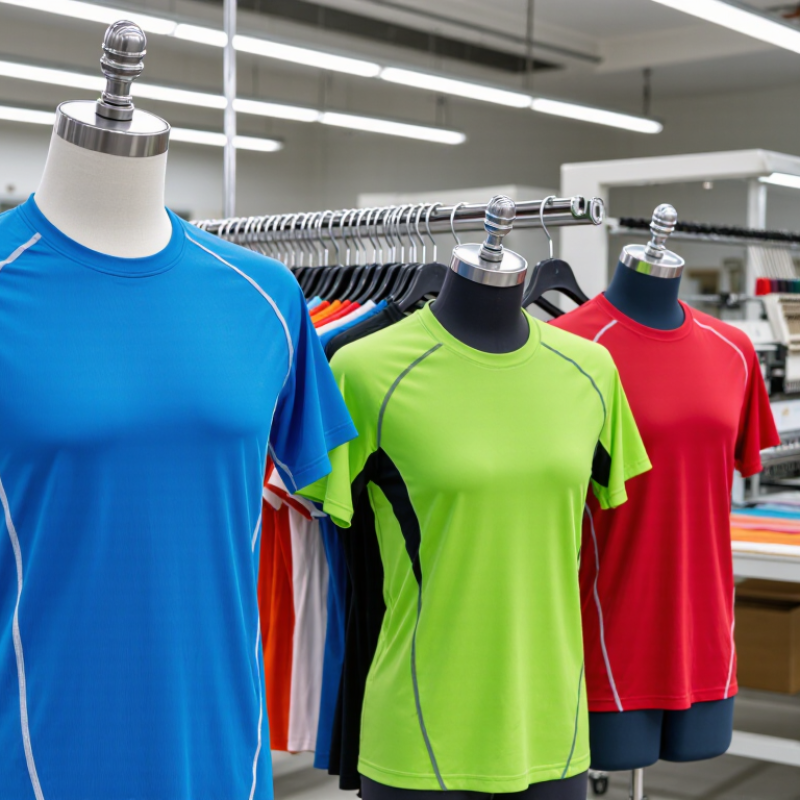
Material selection is the foundation of durability in China’s top sports clothing suppliers. Polyester remains central because it resists abrasion, dries quickly, and holds shape during repeated washing. Textile Exchange’s Materials Market Report 2024 reported that polyester represented about 57% of global fiber production in 2023. That scale supports stable sourcing, but volume alone proves nothing.
Fabric weight matters.
Experienced suppliers often combine polyester with elastane for stretch zones, while using tighter knits around shoulders, waistbands, and inner thighs. Recycled polyester can reduce reliance on virgin resources, yet its performance depends on fiber quality, spinning, and finishing. The same report noted that recycled fibers still formed a limited share of total polyester production. Claims need evidence. A supplier should provide fiber composition, yarn details, and test records rather than general sustainability language.
Durability testing should match actual training conditions. ISO 12947 Martindale testing evaluates abrasion resistance, while ISO 12945 testing checks pilling after repeated rubbing. Moisture management also requires controlled laboratory testing, not only a quick water demonstration. In practical inspections, stitching density, seam strength, and fabric recovery deserve equal attention. A high abrasion result may still hide weak seams. That is an easy mistake. Suppliers should also perform wash-cycle testing under defined temperatures and detergents. The approach is not perfect, because athletes wear garments differently, but combining laboratory data with field feedback gives buyers a more reliable material decision.
Durable sportswear starts with garment construction, not fabric weight alone. In factory quality checks, reinforced stitching often reveals the real difference. Flatlock seams reduce rubbing against skin during repeated movement. A narrow, consistent stitch length also limits seam opening after washing. Bar-tacks should secure pocket corners, drawcord exits, and zipper ends. These small details face high stress during training.
The WRAP Valuing Our Clothes study found that extending a garment’s active life by nine months can reduce its carbon, water, and waste footprints by around 20–30%. Construction quality directly supports that longer use. Suppliers should test seam strength under ISO 13935 methods. Abrasion testing under ISO 12947 can expose weak panels before production. Washing tests matter too. A garment may survive the lab but fail after rough handling.
Fabric selection still affects performance. Textile Exchange’s Materials Market Report 2024 reported polyester accounted for about 57% of global fiber production in 2023. However, synthetic content cannot repair poor sewing. Double-needle seams, covered elastic edges, and high-recovery thread improve repeated wear. Pressing temperature also needs control, especially around elastane. Too much heat can damage stretch recovery. No seam is failure-proof. Even experienced teams may overlook pilling, color loss, or distorted hems after several wash cycles. Small-batch testing and clear inspection records make those weaknesses easier to correct.
Durable sportswear starts with controlled materials, not attractive samples. In a factory audit, inspectors should check fabric weight, fiber composition, stretch recovery, and color consistency. Many manufacturers use GSM testing to confirm that each fabric roll matches the approved specification. A small variation can change comfort and lifespan. Incoming materials are quarantined until quality staff complete testing.
During production, quality teams monitor stitching density, seam allowance, panel alignment, and elastic tension. Seam strength tests can reveal weak points around pockets, waistbands, and shoulder joins. Abrasion, pilling, shrinkage, and colorfastness tests help predict daily wear. Moisture-management fabrics also need laboratory checks after repeated washing. These details matter more than a perfect showroom sample.
Common manufacturing systems include documented inspection records, calibrated equipment, and AQL-based final checks. However, paperwork alone does not guarantee durability. A garment may pass inspection and still fail after careless washing. No system catches everything. Suppliers should retain production samples and compare them after laundering, stretching, and repeated abrasion. This practical step exposes problems early, although it consumes time and fabric. I have seen minor thread tension changes create visible seam waves. That issue looked harmless at first. It was not. Reliable suppliers investigate such findings instead of hiding them, then adjust machines, retrain operators, and verify the correction with another test.
China Top Sports Clothing Suppliers: What Makes It Durable?
Performance sports clothing must handle repeated stretching, sweat, washing, and rough contact with equipment. Durable suppliers choose fabrics with strong abrasion resistance and reliable stretch recovery. A fabric that feels soft may still weaken after several training sessions. That is why laboratory testing and real-use inspections should work together. Flat seams reduce friction around the shoulders, waist, and inner thighs. Reinforced stitching also protects stress points, especially near pockets and waistbands. Small details matter.
Moisture-wicking construction helps sweat move away from the skin, reducing discomfort during long workouts. Quick-drying fibers can also limit odor buildup, although no fabric solves every hygiene problem. Colorfast dyes help prevent fading after repeated washing. Zippers, drawcords, and elastic bands need careful attachment. In quality checks, inspectors should pull, stretch, and wash samples before approving production. I have seen attractive samples fail because the seams were too tight. Durability is not only about fabric weight.
Tips: Check the fabric composition, seam strength, wash performance, and stretch recovery before placing a large order. Ask for testing records, but review sample results independently. Test clothing after several washes, not just once. A slightly heavier fabric may last longer, yet it can feel uncomfortable in hot weather. The best choice balances protection, breathability, fit, and production consistency.
| Performance Feature | How It Protects the Garment | Relevant Durability Indicator | Common Test or Reference | Practical Benefit During Use |
|---|---|---|---|---|
| High abrasion resistance | Reduces surface damage caused by repeated contact with benches, floors, equipment, backpacks, and other garments. | Resistance to pilling, fuzzing, holes, and visible surface wear after repeated rubbing. | Martindale abrasion testing, ASTM D4966, or equivalent laboratory method. | Helps preserve appearance and fabric integrity in training and contact-heavy activities. |
| Pilling resistance | Limits the formation of small fiber balls created by friction during wear and laundering. | Pilling grade, commonly reported on a 1–5 scale, where higher ratings indicate better resistance. | ISO 12945 or ASTM D4970, depending on the selected procedure. | Keeps garments looking smoother and more professional over repeated use. |
| High-tensile-strength fibers | Improves resistance to pulling, stretching, and accidental snagging during dynamic movement. | Tensile strength, tear strength, and elongation before fabric failure. | ISO 13934 for tensile properties and ISO 13937 for tear strength. | Supports reliable performance during stretching, lifting, running, and outdoor activity. |
| Four-way stretch with recovery | Allows the fabric to extend with body movement and return toward its original dimensions, reducing permanent deformation. | Stretch percentage and dimensional recovery after repeated extension. | Stretch and recovery procedures based on ASTM D3107 or applicable textile specifications. | Reduces sagging at knees, elbows, waistbands, and other high-movement areas. |
| Reinforced seams | Distributes stress across the seam and lowers the risk of thread breakage or seam opening. | Seam strength, stitch density, and resistance to seam slippage. | ASTM D1683 or equivalent seam-strength and seam-slippage assessment. | Provides added protection at the crotch, armholes, shoulders, pockets, and side panels. |
| Flatlock or covered seams | Creates a low-profile seam that reduces edge friction and helps shield thread from direct abrasion. | Seam durability, stitch security, and reduced seam-edge wear. | Visual construction inspection combined with seam-strength testing. | Improves comfort while reducing premature wear caused by rubbing against skin or equipment. |
| Moisture-wicking construction | Moves liquid sweat across or away from the skin-facing surface, helping the fabric dry more efficiently. | Wicking rate, spreading speed, drying time, and liquid-moisture management. | AATCC 195 or equivalent moisture-management testing. | Reduces prolonged dampness, which can contribute to odor retention and fabric stress. |
| Quick-drying fabric | Allows moisture to evaporate more rapidly, limiting the time the fabric remains wet and heavy. | Drying rate or percentage of moisture removed over a defined time period. | Laboratory drying-rate procedures specified by the buyer or applicable textile standard. | Helps maintain comfort and reduces repeated wet-weight loading on seams and fabric. |
| Colorfastness to perspiration | Helps prevent dyes from bleeding, staining adjacent materials, or fading when exposed to acidic or alkaline sweat. | Color change and staining ratings, commonly evaluated on a 1–5 gray-scale system. | ISO 105-E04 or AATCC 15. | Maintains color appearance during intense workouts and frequent washing. |
| Colorfastness to washing and light | Reduces fading and color transfer caused by laundering, detergent, sunlight, and outdoor exposure. | Color change, staining, and lightfastness rating after controlled exposure. | ISO 105-C06 for washing and ISO 105-B02 for artificial light exposure. | Extends the usable appearance of sportswear used outdoors or washed frequently. |
| Dimensional stability | Controls shrinkage, twisting, and shape distortion after washing and drying. | Percentage change in length and width after a specified laundering cycle. | ISO 5077 and ISO 6330 or equivalent care-cycle testing. | Helps preserve fit, mobility, and the intended position of protective panels. |
| UV-resistant construction | Reduces ultraviolet-related weakening and fading when garments are used in prolonged sunlight. | Ultraviolet protection factor and retained strength or color after exposure. | AS/NZS 4399 or ASTM D6603 for UV-protection evaluation, where applicable. | Supports fabric longevity for running, cycling, hiking, and other outdoor sports. |
| Anti-odor treatment or fiber design | Helps reduce odor formation or retention caused by microorganisms and sweat residues. | Odor-control performance after wear and laundering, with treatment durability verified separately. | AATCC TM211 or another validated odor-evaluation method. | Can reduce the need for aggressive washing, helping limit cumulative laundering wear. |
| Durable water-repellent finish | Encourages light rain and splashes to bead and roll off the surface instead of quickly wetting the outer fabric. | Spray rating, wetting resistance, and retained performance after laundering. | AATCC TM22 or ISO 4920; wash durability should be specified separately. | Helps reduce water uptake and drying load during short outdoor exposure. |
| Care-label compliance and controlled laundering | Correct washing temperature, detergent selection, drying method, and avoidance of excessive heat help preserve fibers, elastane, coatings, and prints. | Performance retention after the agreed number of home-laundering cycles. | ISO 6330 or an approved care-cycle protocol defined in the product specification. | Prevents avoidable damage and helps the garment maintain its original fit and function for longer. |
Note: Actual durability depends on fiber content, fabric weight, garment construction, finishing process, usage intensity, and care conditions. Test methods and acceptance levels should be agreed in the product specification.
How to Evaluate a Durable Sports Clothing Supplier in China
Durability starts with verified materials, not attractive product photos. Ask suppliers for fabric composition, weight, stretch recovery, colorfastness, and pilling results. A serious supplier should explain testing methods clearly. Request physical samples before discussing large orders. Inspect the fabric after repeated washing, drying, and stretching. Check whether seams twist, elastic loses tension, or printed details crack. Small defects often reveal larger production problems.
Tips: Compare two or three samples under identical conditions. Record measurements before and after washing. Ask for independent laboratory reports when performance claims seem unclear. Visit the factory, or arrange a professional third-party audit. Review cutting rooms, sewing lines, quality checkpoints, and storage conditions. Consistent production matters more than one excellent sample. Confirm whether the supplier can repeat the same fabric specification months later. Traceable records, clear inspection standards, and prompt answers show stronger professional reliability.
Do not judge durability by thickness alone. Heavy fabric can still fail through weak stitching or poor finishing. A lower-cost supplier may appear efficient, but replacement orders can become expensive. I have seen evaluation plans focus heavily on fabric and overlook waistbands, zippers, and seam pressure. That mistake is easy to repeat. Ask for a small trial order and define acceptance standards in writing. The best supplier is not always the largest. It is the one that can explain, test, document, and consistently deliver the same performance.
How to Evaluate a Durable Sports Clothing Supplier in China
This buyer evaluation framework assigns practical review weights to the main durability evidence a supplier should provide. Verify test reports against recognized textile methods, including ISO 12947 for abrasion resistance, ISO 13934-1 for tensile strength, ISO 13935-2 for seam strength, ISO 6330 and ISO 5077 for washing and dimensional change, and ISO 105-C06 for color fastness. The percentages are recommended purchasing priorities, not market averages or company performance claims.
Polyester resists abrasion, dries quickly, and keeps its shape after repeated washing. Elastane adds stretch in movement areas. Volume alone proves nothing.
Heavier fabric may last longer, but it can feel hot and restrict movement. Buyers should balance durability, breathability, comfort, and fit.
Request fiber composition, yarn details, and laboratory records. Sustainability language needs evidence. Supplier statements may be incomplete.
Flatlock seams reduce skin rubbing during movement. Bar-tacks should secure pocket corners, drawcord openings, and zipper ends.
Check stitch consistency, seam strength, and reinforced stress points. Pull samples firmly. Weak stitching can hide behind attractive fabric.
Abrasion, pilling, moisture management, stretch recovery, and wash-cycle tests provide useful evidence. Testing should match real training conditions.
Heat, detergent, and rough handling can expose color loss, pilling, distorted hems, or damaged elastic. One wash is not enough.
No fabric solves every hygiene issue. Quick-drying fibers can reduce lingering moisture, but washing habits and garment ventilation still matter. Not perfect.
Test small batches after several washes. Review samples independently. Compare seam strength, fabric recovery, color retention, and comfort during movement.
Focusing only on fabric weight or abrasion results. A strong fabric can still have weak seams, tight stitching, or poor elastic attachment.
Durability in sports clothing begins with careful material selection. China’s top sports clothing suppliers typically choose fabrics that balance strength, stretch, breathability, moisture management, and resistance to abrasion. What makes sports clothing durable is not only the fabric itself, but also how every garment is constructed. Reinforced seams, secure stitching, durable waistbands, quality zippers, and well-finished edges help clothing withstand repeated movement, washing, and daily use.
Reliable suppliers also apply strict quality control throughout production, including fabric inspections, measurement checks, colorfastness testing, seam-strength evaluations, and final garment inspections. Performance features such as anti-pilling finishes, quick-drying treatments, UV protection, and odor-control properties can further protect sportswear during demanding activities. When evaluating a durable sports clothing supplier in China, buyers should review material specifications, manufacturing capabilities, quality-control procedures, sample performance, production consistency, and communication standards. A supplier that can provide clear testing information and maintain stable quality is more likely to deliver sports clothing with dependable long-term performance.

Reba Fashion