A functional workout wardrobe should make movement easier, not add another decision to a busy morning. The right pieces depend on your activities, local weather, comfort, and laundry routine. A runner may need breathable layers, while someone lifting weights might value coverage and fabric that stays put. Small details matter. A waistband that rolls down or a shirt that traps heat can distract from the workout.
Learning how to build a functional workout wardrobe starts with noticing what you actually wear, rather than buying a complete matching set. Check how garments fit during squats, stretches, and reaching overhead. Look for seams that rub, pockets that bounce, and fabrics that feel comfortable against your skin. Care labels matter, too; frequent washing can wear out delicate pieces faster than expected. There is no single fabric or outfit that suits everyone. Even a thoughtful shopping list can miss the mark if you have not tested how clothes move. That is worth reconsidering before buying more.
The ten tips ahead focus on practical choices: choosing versatile essentials, dressing for different conditions, and checking fit before committing. They also consider durability, care, and budget. Start with a few reliable pieces. Then adjust as your routine changes. A wardrobe that works is not necessarily large or stylish in every photo. It should help you feel comfortable, prepared, and free to focus on the next rep, mile, or stretch.
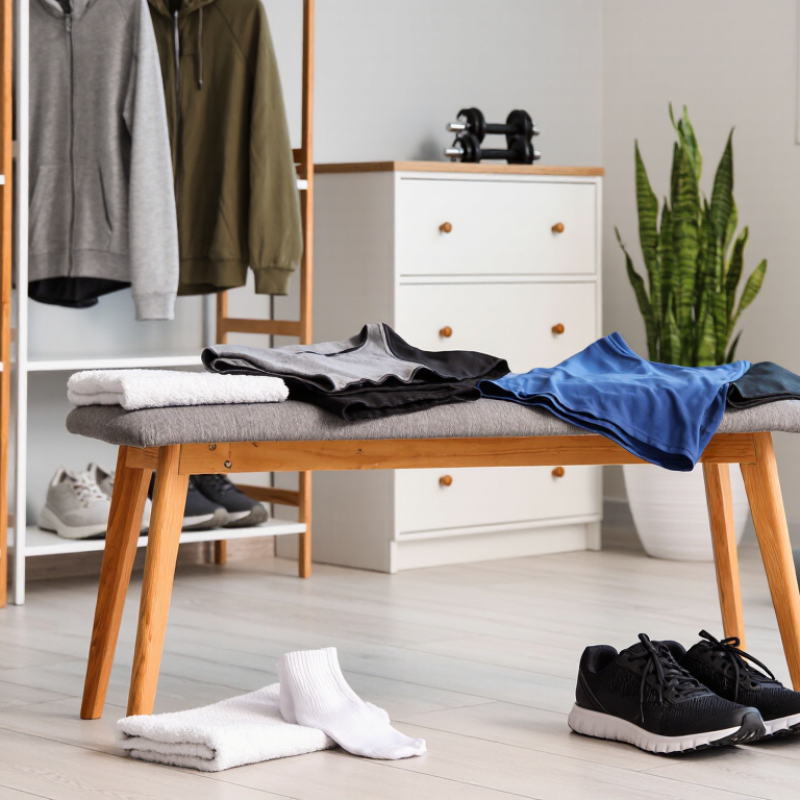
The World Health Organization recommends that adults aim for 150–300 minutes of moderate-intensity aerobic activity each week. That could mean a 30-minute brisk walk on five days, or shorter sessions fitted around work and family routines. Your workout wardrobe should support the activities you actually do, not an ideal schedule that rarely happens. A week of walking, cycling, and gym sessions may call for different layers and levels of support. Start with your calendar.
Tip: Track your workouts for one week. Note the activity, duration, weather, and what felt uncomfortable. A shirt that clings during a warm walk may be fine for a cool indoor session. Look for breathable fabric, seams that do not rub, and waistbands that stay put through repeated movement. Try garments in the motions you use, such as reaching overhead or stepping into a lunge.
Clothing can make regular activity more comfortable, but it does not create the habit by itself. Keep enough clean, suitable options for your realistic weekly routine. You may not need a separate outfit for every session. It is easy to overestimate how often you will train; revise your choices after a few weeks. Notice what you actually reach for. Comfort is personal.
| # | Tip | Training Need | What to Look For | Practical Wardrobe Plan |
|---|---|---|---|---|
| 1 | Start with your weekly activity plan | Build clothing choices around the activities you actually do, such as walking, cycling, strength training, or group exercise. | Choose pieces suited to the movement, weather, and setting of each activity. | List your usual sessions for one week before buying anything new. |
| 2 | Use the health guidelines as a planning reference | For adults, WHO recommends 150–300 minutes of moderate-intensity aerobic activity, or 75–150 minutes of vigorous-intensity activity, per week, or an equivalent combination. Adults should also do muscle-strengthening activities on 2 or more days a week. | Plan enough comfortable, clean clothing for your intended schedule; clothing does not determine whether activity meets the guidelines. | Spread activity across the week in a way that fits your routine and abilities. |
| 3 | Prioritize fit and freedom of movement | Running, bending, stretching, and lifting require garments that stay in place without restricting movement. | Try squatting, reaching, and raising your arms when checking fit. Avoid seams or waistbands that rub or dig in. | Keep one versatile outfit for your most common type of session. |
| 4 | Choose fabrics for comfort and care | Sweaty or longer sessions can make damp clothing uncomfortable. | Consider lightweight, quick-drying fabrics for sweaty workouts; check the care label and choose materials that feel comfortable against your skin. | Start with a few tops you can wash and dry reliably between sessions. |
| 5 | Match support to the activity | Activities with more bouncing may call for more breast support than low-impact activities. | Look for a secure, comfortable fit that allows easy breathing and movement. Fit needs vary from person to person. | Try support garments during the movements you expect to do, where possible. |
| 6 | Choose footwear for the surface and session | Walking, running, court sports, and gym workouts can involve different movement patterns and surfaces. | Choose comfortable footwear appropriate to the activity and surface; replace it if it becomes uncomfortable or no longer provides suitable support. | Use activity-appropriate footwear rather than assuming one pair suits every sport. |
| 7 | Layer for changing conditions | Outdoor sessions can involve changing temperatures, wind, or light rain. | Use removable layers, such as a light outer layer over a comfortable base layer; consider visibility in low-light conditions. | Add layers based on the forecast and remove them as you warm up. |
| 8 | Include practical small essentials | Longer sessions or outdoor routes may require carrying personal items. | Pockets or a secure waist pack can hold essentials without interfering with movement. | Carry only what you need, such as a key, identification, or phone. |
| 9 | Build a manageable laundry rotation | Regular training works better when clean, dry clothing is ready for the next session. | Follow garment care instructions and allow damp items to dry before storing them. | Choose the number of outfits based on your workout frequency and laundry schedule. |
| 10 | Buy gradually and replace based on wear | Comfort, fit, and durability matter more than having a large collection. | Check for persistent discomfort, damaged seams, stretched elastic, or worn shoe soles. | Replace items when they no longer serve their purpose; add pieces only when a real gap appears. |
Note: WHO activity recommendations are for adults. The wardrobe quantities and selection suggestions above are practical planning ideas, not medical guidance; individual needs vary.
Aim for 150–300 minutes of moderate aerobic activity each week. A 30-minute brisk walk on five days is one practical option.
Track your workouts for one week. Note the activity, duration, weather, and any discomfort. Test clothes while reaching overhead or stepping into a lunge.
Not necessarily. Keep enough clean, suitable clothes for your realistic schedule. Review your choices after a few weeks. Plans can change.
A lightweight, long-sleeved top labeled UPF 50+ can help outdoors. Under test conditions, it blocks about 98% of ultraviolet radiation. Roughly 2% passes through.
No. Add shade and sunscreen to uncovered skin. Check coverage while stretching, since sleeves can pull up. A label is not a force field.
Fabric can shrink or grow after laundering. Even a small change may make leggings ride up or a top feel tight. That matters.
They compare fabric measurements before and after specified washing and drying. Results can help compare materials, but they cannot predict every household’s outcome.
Follow the care label, such as cool-water washing and low-heat drying. Check favorite pieces after several washes. Easy to forget. I sometimes do.
Building a useful exercise wardrobe starts with your training routine. The World Health Organization recommends 150–300 minutes of moderate-intensity activity each week, so consider how often and where you exercise before choosing what you need. For comfort, look for fabrics designed to manage moisture, and use AATCC TM195 as a reference for how liquid moisture performance is assessed. Stretch matters too: garments should move with you and recover their shape, qualities evaluated for knitted fabrics by ASTM D2594.
For outdoor workouts, add sun-protective layers; UPF 50+ fabric blocks about 98% of UV radiation. Finally, think about care before buying. Washing can affect a garment’s size, and AATCC TM135 measures dimensional changes after laundering. Together, these considerations offer a practical approach to how to build a functional workout wardrobe: choose items suited to your activities, comfortable in motion, appropriate for your environment, and durable enough for regular use.

 Reba Fashion