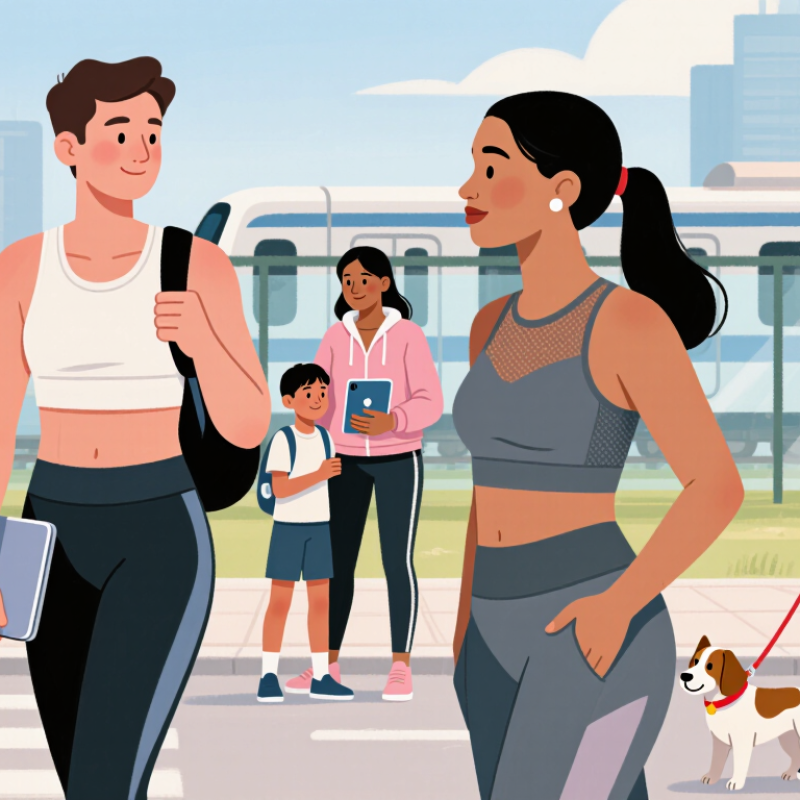
What Is Everyday Activewear Comfort and Why It Matters?

Time:2026-10-20 Author:Ethan
0%

Everyday activewear has moved beyond gyms, studios, and weekend runs. It now follows people through commutes, school drop-offs, remote work, and evening walks. Fabric touches the skin for hours. Waistbands press during sitting. Seams can rub beneath a jacket. These small details shape whether clothing feels supportive or distracting.

The commercial evidence is substantial. Grand View Research estimates that the global activewear market reached approximately USD 412 billion in 2023, with continued growth expected through 2030. Its analysis links expansion to wellness lifestyles, casual dressing, and demand for versatile performance clothing. McKinsey & Company and the World Federation of the Sporting Goods Industry also identify everyday use as a major force changing sportswear design. However, market growth does not automatically prove comfort. That point needs more careful testing.

This explains why comfort is important in everyday activewear. Breathable fibers, four-way stretch, flat seams, and stable waistbands can reduce irritation during ordinary movement. Moisture management matters when a crowded train becomes unexpectedly warm. Soft compression may feel secure, while excessive compression can restrict breathing or create pressure points. Comfort is personal, not universal.

Fashion psychologist Dr. Karen Pine states, “What we wear affects how we think, feel and behave.” Her observation adds a human dimension to product research. Comfortable clothing may support confidence, concentration, and freer movement. Yet brands should avoid promising emotional benefits without evidence. Real comfort depends on body shape, climate, activity, fabric sensitivity, and personal preference. It is not a finished formula. It is a design responsibility that must be tested on real bodies, in real routines.

What Is Everyday Activewear Comfort and Why It Matters?

Defining Everyday Activewear: From Sportswear to Daily Comfort

Everyday activewear is no longer limited to gyms, courts, or running tracks. It now includes stretch trousers, breathable tops, supportive layers, and lightweight jackets worn during commutes or errands. Grand View Research estimated the global activewear market at about US$412 billion in 2023. Its report also projects steady growth through 2030. This shift reflects changing routines, where one outfit may serve a morning walk, office desk, and grocery trip.

Comfort depends on more than softness. A practical garment needs flexible seams, stable waistbands, breathable fabric, and pockets that do not pull the material down. In my experience, poor fit becomes obvious after several hours. A shirt may feel smooth in a fitting room, then trap heat on a crowded train. McKinsey’s State of Fashion research has identified sportswear as an important influence on casual clothing. Still, convenience should not replace durability. Some “performance” fabrics lose shape quickly, and that deserves more honest attention.

Tips: Check the garment while sitting, walking, and reaching. Look for fabric recovery after stretching. Choose moisture control for warm commutes, but avoid assuming every technical finish improves comfort. Wash according to care instructions, because repeated heat can weaken elasticity. Comfort is personal, and sizing charts remain imperfect. Waist measurements, body movement, and climate can change the experience.

Global Demand Explained: Grand View Research’s $412.3B 2023 Market

What Is Everyday Activewear Comfort and Why It Matters?

Everyday activewear has moved beyond gyms and running tracks. People wear it while commuting, working from home, shopping, and walking children to school. Grand View Research valued the global activewear market at $412.3 billion in 2023. That figure reflects more than exercise habits. It shows growing demand for clothing that supports movement without looking overly technical.

Comfort depends on several measurable details. Breathable fabric helps reduce dampness during crowded train rides or warm afternoon walks. Stretch recovery matters after repeated bending and washing. A waistband should stay secure without leaving deep marks. Flat seams can reduce rubbing around the shoulders, hips, and inner thighs. In practical wear testing, small issues become obvious quickly. A pocket may bounce. A soft fabric may lose shape. No garment performs perfectly in every situation.

Tips: Try activewear during ordinary tasks, not only workouts. Sit for ten minutes, climb stairs, and check the waistband afterward. Wash one item several times before buying more. Read fiber content and care instructions carefully. Fit remains personal, so size charts are useful but imperfect. A garment can feel comfortable in a fitting room yet become restrictive after a full day. This gap deserves more attention from shoppers and product developers.

The Comfort Science: Moisture Control, Stretch, Fit, and Breathability

What Is Everyday Activewear Comfort and Why It Matters?

Everyday activewear comfort begins with moisture control. During a brisk walk, sweat should move away from skin before fabric feels clammy. Quick-drying fibers can help, but drying speed depends on construction, humidity, and garment thickness.

Textile Exchange’s Materials Market Report 2024 recorded 124 million tonnes of global fiber production in 2023. That scale makes material choices important, even for one simple shirt.

Stretch supports natural movement without constant pulling at the shoulders or knees. A practical garment should recover after bending, sitting, and repeated washing. Poor recovery creates sagging panels and distracting pressure.

Fit is personal. Waistbands should stay secure without leaving deep marks. Seams should sit smoothly under a backpack or jacket. Small details matter.

My own testing often reveals a problem that product descriptions miss: a soft fabric can still feel restrictive when the cut is wrong.

Breathability depends on airflow through both fabric and design. Mesh zones, looser panels, and lighter knits may release heat around the back and underarms. ASTM D737 measures fabric air permeability, while moisture-management testing can assess drying and wicking performance.

These tests add useful evidence, but they cannot predict every body or climate. The World Health Organization’s Global Status Report on Physical Activity 2022 estimated that 31% of adults worldwide were insufficiently active.

Comfortable clothing cannot solve that challenge, yet reducing heat, dampness, and friction may remove one small barrier. The science is helpful, but never perfectly tidy.

Movement and Well-Being: WHO’s 150–300 Weekly Activity Recommendation

What Is Everyday Activewear Comfort and Why It Matters?

Movement and well-being are closely connected. The World Health Organization recommends 150–300 minutes of moderate physical activity weekly for most adults. It also recommends muscle-strengthening activities on two or more days. This target may sound demanding, but daily movement can make it manageable. A brisk walk, active commute, household chores, and weekend cycling all contribute. Comfortable activewear supports these small choices. Soft fabric, flexible seams, and breathable panels can reduce distractions during movement. When clothing feels restrictive, people may stop earlier than planned. I have noticed this during long walks. A tight waistband can become more irritating than expected.

Comfort is not only a fashion preference. It can influence consistency, confidence, and willingness to move. However, clothing cannot replace proper training or medical guidance. The WHO recommendation is a useful public-health standard, not a personal test of worth. People have different schedules, fitness levels, ages, and health conditions. I still miss some weekly targets. That does not make movement pointless. Starting with ten-minute sessions may feel more realistic than chasing perfection. Gradual progress is often easier to maintain.

Tips: Choose clothes that allow full movement without constant adjustment. Check seams around the shoulders, waist, and thighs. Select layers for changing temperatures. Keep comfortable shoes nearby. Break up long sitting periods with brief walks or stretches. Track how your body feels, not only your minutes. Rest when pain appears, and seek qualified advice when needed.

What Is Everyday Activewear Comfort and Why It Matters? – Movement and Well-Being: WHO’s 150–300 Weekly Activity Recommendation

Evidence-based activity targets and practical comfort dimensions for everyday movement

Dimension Evidence-based data or benchmark Why it matters for everyday activewear comfort Practical comfort indicator
Weekly moderate activity Adults should complete at least 150 minutes of moderate-intensity aerobic activity per week; WHO identifies 150–300 minutes as the recommended range. Clothing may be worn repeatedly for walking, commuting, errands, and other regular movement, so comfort must remain consistent over time. No persistent rubbing, pressure points, or restriction during repeated low-to-moderate activity.
Vigorous-intensity equivalent Adults can alternatively complete 75–150 minutes of vigorous-intensity aerobic activity per week, or an equivalent combination of moderate and vigorous activity. Higher exertion can increase heat, sweat, and movement forces, making breathability, secure fit, and freedom of motion more important. The garment stays in place and does not become excessively hot, heavy, or restrictive as intensity rises.
Muscle-strengthening activity WHO recommends muscle-strengthening activities involving major muscle groups on 2 or more days per week for adults. Squats, lifting, carrying, and floor-based movements require fabric and seams that accommodate bending, reaching, and changing body positions. Full movement is possible without seam strain, waistband rolling, or fabric pulling across joints.
Activity intensity WHO describes moderate activity as approximately 3.0–5.9 METs and vigorous activity as 6.0 METs or more. Different intensity levels create different demands for stretch, ventilation, moisture management, and garment stability. The same garment remains wearable across light daily movement and more demanding sessions.
Sedentary-time reduction WHO recommends limiting sedentary time and replacing it with physical activity of any intensity, including light-intensity movement. Everyday activewear should be comfortable not only during exercise, but also while standing, walking, traveling, and completing household tasks. Comfort is maintained during prolonged sitting, standing, and frequent transitions between positions.
Thermal comfort Physical activity increases metabolic heat production; higher-intensity activity generally increases the need for heat dissipation and sweat management. Breathable construction and effective moisture movement can help reduce clamminess and discomfort during active use. The fabric does not remain excessively wet, cling uncomfortably, or trap heat during movement.
Fit and pressure There is no single universal clothing pressure value for all bodies or activities; comfort depends on fit, fabric stretch, garment construction, and personal sensitivity. A balanced fit supports movement without creating unnecessary compression, slipping, or pressure at the waist, shoulders, thighs, or underarms. The garment feels secure but not tight, and remains stable during walking, bending, and reaching.
Skin and seam comfort Repeated movement and moisture can increase the likelihood of friction-related irritation, especially in areas where fabric, seams, and skin repeatedly contact. Smooth seam placement, suitable construction, and a comfortable hand feel can support longer wear and more frequent activity. No noticeable chafing, scratchiness, seam digging, or irritation during or after activity.
Mobility and range of motion Movement patterns such as walking, climbing stairs, squatting, reaching, and sitting involve repeated changes in joint angles and body position. Adequate stretch and thoughtful pattern design help clothing follow the body instead of resisting ordinary movement. The wearer can walk, sit, squat, reach, and climb stairs without fabric restriction.
Wear frequency and durability Meeting the WHO weekly target may involve activity distributed across multiple days, creating repeated cycles of wear, washing, drying, and movement. Durable construction and retained shape support reliable comfort across regular use rather than only during the first wear. The garment maintains fit, stretch, and surface comfort after repeated normal care and use.
Reference: World Health Organization, Guidelines on Physical Activity and Sedentary Behaviour (2020). Recommendations apply primarily to adults aged 18–64 unless otherwise specified. MET values and weekly activity targets are presented as WHO guideline benchmarks; comfort indicators are practical evaluation criteria rather than medical requirements.

Evaluating Performance: ASTM and ISO Methods for Activewear Testing

Everyday activewear comfort depends on more than softness. A fabric must manage sweat, movement, friction, and repeated washing. In practical wear trials, I notice discomfort first at the waistband, inner thigh, and underarm. Small pressure points become obvious during a long commute or a ninety-minute workout.

Laboratories use ASTM and ISO methods to measure these experiences more consistently. ASTM D4966 and ISO 12947 can assess abrasion resistance through repeated rubbing. ISO 13934-1 measures tensile strength, showing how fabric responds when stretched. ASTM D737 evaluates air permeability, while ISO 11092 examines thermal and water-vapor resistance. These results help connect fabric behavior with daily comfort.

Test conditions matter. A fabric may perform well after controlled washing, yet feel tight after several hours of real movement. ASTM and ISO procedures improve reliability, but no single method captures every body, climate, or activity. That limitation deserves attention. Human wear trials should support laboratory data, not replace it. A useful evaluation may include bending, cycling, stair climbing, and sitting at a desk. Inspectors can record damp patches, seam pressure, drying time, and fabric recovery. Comfort is measurable, but never perfectly.

FAQS

What makes activewear comfortable for everyday use?

Comfort comes from breathable fabric, useful stretch, secure waistbands, and smooth seams. Small details matter. Clothing should support commuting, shopping, and walking.

Why is moisture control important in activewear?

Moisture control helps move sweat away from the skin during brisk walks or crowded train rides. Quick-drying fabric can help. Humidity and fabric thickness still affect drying speed.

How can shoppers test activewear before buying it?

Sit for ten minutes, climb stairs, and bend several times. Check the waistband afterward. Try ordinary movements, not only workouts. A fitting-room test can mislead you.

What should people check about stretch and fit?

Stretch should support movement without constant pulling at the knees or shoulders. The fabric should recover after bending and washing. Poor recovery may create sagging panels.

How do seams and waistbands affect comfort?

Flat seams can reduce rubbing near the shoulders, hips, and inner thighs. A waistband should stay secure without deep marks. Pressure becomes obvious after several hours.

Can comfortable clothing improve physical activity habits?

It may reduce heat, dampness, and distracting friction. That can make short walks feel easier. Clothing cannot replace training or medical guidance.

How much weekly activity is generally recommended for adults?

Many adults are encouraged to complete 150–300 minutes of moderate activity weekly. Strength exercises are also suggested on two or more days. Ten-minute sessions may feel more realistic.

What materials and design features can improve breathability?

Mesh sections, looser panels, and lighter knits may release heat around the back and underarms. Airflow depends on design, not fabric alone. Testing helps, but it cannot predict every climate or body.

What should people do when activewear feels uncomfortable during movement?

Stop and check the waistband, seams, and restricted areas. Change layers if temperatures shift. Rest when pain appears. I still miss some activity targets. That is not failure.

Conclusion

Everyday activewear has evolved from clothing designed solely for sports into practical apparel for commuting, errands, light exercise, and relaxation. Its growing popularity reflects the expanding global market, valued at approximately $412.3 billion in 2023 according to the provided market overview. The central question is why comfort is important in everyday activewear: comfortable clothing supports natural movement, reduces distractions, and makes people more likely to stay active throughout the day.

True comfort depends on several connected features, including moisture control, flexible stretch, a supportive but nonrestrictive fit, and sufficient breathability. These qualities help regulate body temperature and improve wearability during different activities and conditions. Since regular movement contributes to overall well-being, everyday activewear can support healthy routines alongside the World Health Organization’s recommendation of 150–300 minutes of moderate physical activity per week. Performance should also be evaluated objectively through established ASTM and ISO testing methods, which can assess durability, fabric behavior, moisture management, and other practical properties.

Ethan

Ethan

Ethan is a seasoned marketing professional with a deep expertise in our company's innovative product line. With a passion for sharing knowledge and insights, he takes the lead in regularly updating our corporate blog, where he explores industry trends, product features, and effective marketing......