How to Choose the Best Materials for Active Lifestyles?

Time:2026-09-20 Author:Henry
0%

Choosing clothing for an active lifestyle is not simply a question of softness, stretch, or brand reputation. The better question is: what materials are best for active lifestyles in real conditions? A trail runner needs fast drying fabric, while a cyclist may value abrasion resistance and wind protection. A yoga practitioner may prefer smooth, flexible fibers that do not restrict movement. The right choice depends on activity, climate, skin sensitivity, and washing habits.

Yvon Chouinard, founder of Patagonia, has stated, “The best thing we can do for the planet is to make products that last.” Durability matters. Nylon can resist repeated friction, merino wool can manage temperature and odor, and polyester can move moisture away from the skin. Elastane adds useful stretch, but excessive amounts may reduce long-term resilience. Recycled fibers can lower dependence on new resources, although their environmental benefits depend on production and product lifespan.

No fabric wins every test.

This guide compares practical materials through comfort, breathability, drying speed, durability, odor control, and care requirements. It also considers details people often overlook, such as chafing under backpack straps, damp cuffs after a rainy run, and fabric damage from frequent washing. Lab ratings help, but field experience can reveal more. A shirt may perform well on paper and still feel clammy during a humid workout. That is an important limitation. Material choice is rarely perfect; it is a careful compromise between performance, comfort, price, and responsible use.
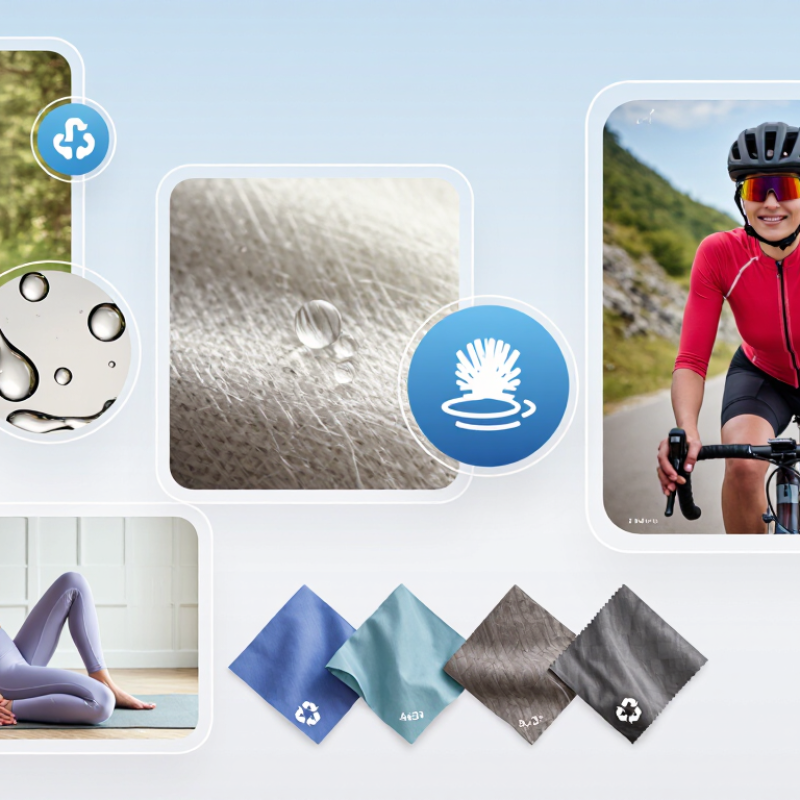
How to Choose the Best Materials for Active Lifestyles?

Define Activity Demands with MET Levels and Sweat Rates

How to Choose the Best Materials for Active Lifestyles?

MET levels offer a practical way to estimate activity demands. One MET represents quiet resting. Walking at a comfortable pace may reach three to four METs. Running, climbing, or competitive court sports often exceed six METs. These numbers are useful, but they are not perfect. Heat, fitness, body size, and terrain can change the effort dramatically.

For lower-MET activities, soft fabrics with moderate airflow may feel comfortable. Cotton can work during a short walk, especially in dry weather. During high-MET exercise, sweat moves faster than fabric can absorb it. Lightweight, quick-drying synthetic blends or fine wool can reduce the heavy, clammy feeling against skin. Look for mesh zones near the back, underarms, and chest.

I once chose a thick shirt for a cool morning run. The temperature rose, and the fabric stayed wet for hours. My choice looked practical, but the test was poor.

Sweat rate gives a more personal measurement. Weigh yourself before and after a one-hour workout, using similar clothing conditions. A one-kilogram loss roughly equals one liter of fluid, after adding drinks and subtracting urine. Sweat rate equals fluid loss divided by exercise time.

Track this across hot and mild sessions. Then match material choices to the pattern. A person losing little fluid may prefer warmth and softness. Someone finishing with soaked clothing needs faster drying and stronger ventilation. Measurements help, but comfort still deserves a second look.

Compare Moisture Control Using ASTM E96 MVTR Data

How to Choose the Best Materials for Active Lifestyles?

Moisture control starts with reliable testing, not a soft fabric label. ASTM E96/E96M measures water vapor transmission rate, or MVTR, in grams per square meter per day. Higher MVTR usually indicates faster vapor movement.

However, test conditions can change the result significantly. The standard includes desiccant and water methods, so compare reports using the same procedure, temperature, humidity, and airflow. A number without conditions is incomplete.

Textile Exchange reported that polyester represented about 59% of global fiber production in its Materials Market Report 2024. Its popularity reflects durability and scalable production, but fiber choice alone does not guarantee comfort.

A tightly knitted polyester shirt may trap heat, while a lighter structure can release perspiration more effectively. ASTM data should therefore be read beside fabric weight, knit density, and drying time. Look for a laboratory report showing MVTR units clearly.

Real movement exposes weak assumptions. A runner may feel comfortable during a cool morning, then clammy during a humid climb. MVTR is useful, but it is not the whole experience. ASTM E96 does not measure stretch, skin friction, or drying after washing. That matters.

Compare at least three samples under identical conditions, and record performance after repeated laundering. The best material may not produce the highest number. It may offer balanced vapor transfer, durability, and a dry hand when activity becomes intense.

Sources: ASTM E96/E96M, Standard Test Methods for Water Vapor Transmission of Materials; Textile Exchange, Materials Market Report 2024.

Evaluate Thermal Comfort with ISO 11092 Ret and Clo Values

Choosing materials for an active lifestyle requires more than checking softness or stretch. Thermal comfort depends on how fabric manages heat, sweat, and insulation during movement. ISO 11092 provides a controlled method for evaluating these properties with a sweating guarded hotplate.

Ret Ret measures evaporative resistance, expressed in square metres pascal per watt. A lower Ret value usually indicates easier moisture vapour transfer. This can help a runner feel less clammy during intense activity.

Clo Clo measures thermal insulation. One Clo equals approximately 0.155 square metres kelvin per watt. Higher Clo values generally retain more warmth, which suits cool-weather training.

Lower Ret helps.

However, a high Clo value may feel excessive during fast movement or humid conditions. Numbers need context. Fabric thickness, garment fit, air gaps, wind, and layering can change comfort in real use. A loose outer layer may trap warmth, while a close-fitting base layer can move sweat more effectively.

ISO 11092 results are valuable, but they do not perfectly recreate a moving body on a rainy trail. That limitation deserves attention. When comparing materials, review Ret and Clo together, then consider activity intensity and climate.

A material with moderate insulation and low evaporative resistance may perform better than a highly insulated option. Testing should also include repeated washing and realistic garment construction, because laboratory fabric results can shift after use.

Measure Wear Resistance Through ISO 12947 Martindale Cycles

How to Choose the Best Materials for Active Lifestyles?

Measure Wear Resistance Through ISO 12947 Martindale Cycles

Active clothing and upholstery face repeated rubbing from movement, backpacks, seats, and equipment. ISO 12947 Martindale testing measures how fabric responds to controlled abrasion. A circular specimen is rubbed against a standard wool fabric under defined pressure. The laboratory records the cycle count before visible damage appears.

Higher Martindale cycles usually indicate stronger abrasion resistance. However, there is no universal “best” result. Lightweight sportswear may need flexibility and breathability more than extreme abrasion strength. Heavy-use travel garments require a different balance. In my product evaluations, fabric construction often matters as much as fiber choice. Tight weaving can delay surface wear, even when the material feels thin.

Textile Exchange’s Materials Market Report 2024 reported approximately 124 million tonnes of global fiber production in 2023. This scale increases pressure to select materials more carefully and extend product life. A high cycle count can support that goal, but it does not guarantee long-term performance. Moisture, washing, seams, stretch, and sharp objects can create failure earlier.

Do not compare results blindly.

ISO 12947 should be read with the test pressure, fabric structure, and end-use requirements. A fabric reaching 50,000 cycles may perform poorly if its seams loosen after repeated stretching. The honest choice is sometimes less impressive on paper. Pair laboratory data with real movement trials, laundering tests, and close inspection of worn areas.

How to Choose the Best Materials for Active Lifestyles?

Measure wear resistance through ISO 12947 Martindale cycles

Higher Martindale cycle counts indicate greater resistance to surface abrasion. As practical selection benchmarks, fabrics for occasional residential use are commonly assessed from around 10,000 cycles, while active daily use generally benefits from 25,000–50,000 cycles or more. Intensive commercial applications may require 80,000 cycles or above. ISO 12947 defines the test method; it does not set one universal pass/fail threshold for every end use.

Source: ISO 12947 textile abrasion-testing method. Actual performance varies with fiber, yarn structure, fabric construction, finish, backing, and cleaning conditions.

Verify Material Safety with OEKO-TEX and GRS Standards

How to Choose the Best Materials for Active Lifestyles?

Comfort matters during running, cycling, and long training sessions, but material safety deserves equal attention. Sweat, heat, and repeated washing can increase skin contact with fabric finishes. OEKO-TEX Standard 100 certification helps assess textiles for harmful substances. It applies to the finished product, including thread, buttons, prints, and elastic parts.

Check the certificate number, not only a printed label. Ask for evidence. The certificate should match the product, supplier, and certification period. A lightweight running shirt may feel safe, yet its bright print or elastic waistband also requires attention. Product classes matter because clothing worn directly against skin faces stricter requirements than decorative materials.

GRS certification addresses recycled content and responsible processing. It tracks recycled fibers through the supply chain, from the recycler to the finished garment. Request a valid scope certificate and transaction certificate for the specific order. GRS also includes environmental and social criteria, but it does not replace chemical safety testing. That distinction is easy to miss.

A recycled polyester jacket may support resource efficiency, but “recycled” alone proves little. Verify the claimed percentage and material composition. Labels can mislead. Supplier documents can also become outdated. I would recheck them before every major purchase, especially when colors, factories, or fabric blends change. This extra step feels slow, but it creates a more reliable basis for activewear decisions.

How to Choose the Best Materials for Active Lifestyles? - Verify Material Safety with OEKO-TEX and GRS Standards

Material Typical Moisture Regain Drying Performance Stretch Potential Key Strength for Activewear Common Limitation OEKO-TEX Verification Focus GRS Verification Relevance
Polyester Approximately 0.4% Very fast Low by itself; improved with knit construction or elastane Low water absorption, durability, shape retention, and easy care May retain odor; fiber is not inherently biodegradable Finished-product testing for harmful substances, including dyes and process chemicals Recycled polyester can qualify when recycled content and supply-chain requirements are documented
Polyamide (Nylon) Approximately 4.5% Fast Moderate to high, depending on yarn and knit structure High abrasion resistance, smooth hand feel, and good strength Can absorb more moisture than polyester and may dry less quickly Testing of the finished garment and components for restricted substances Recycled polyamide may qualify if recycled input and chain-of-custody evidence are verified
Cotton Approximately 8.5% at standard atmospheric conditions Slow to moderate Low to moderate; depends on knit structure and elastane content Soft hand feel, breathability, and comfort in low-to-moderate intensity activities Absorbs sweat and can feel wet or heavy during high-intensity exercise Check dyes, finishes, prints, elastics, and other garment components Recycled cotton may qualify when the recycled source and transaction records are verified
Merino Wool Approximately 14–18% Moderate; absorbs vapor before feeling wet Low to moderate natural elasticity Temperature regulation, odor resistance, and comfort across changing conditions Can be less abrasion-resistant and may shrink or felt without suitable care Testing for dyes, finishing agents, and other substances in the finished product Recycled wool may qualify when recycled content and certified supply-chain controls are documented
Elastane (Spandex) Approximately 1–1.5% Fast when blended with hydrophobic fibers Very high; commonly provides four-way stretch in suitable constructions Body-mapping, freedom of movement, and recovery after stretching Heat, chlorine, oils, and repeated washing can reduce elasticity over time Check the complete blend, dyes, finishes, and elastic components for restricted substances Usually evaluated as part of a certified recycled-fiber blend; verify scope and content documentation
Polyester/Elastane Blend Usually approximately 0.4–1.5%, depending on blend ratio Very fast High, with good stretch recovery A practical balance of moisture management, durability, and mobility Performance depends strongly on fabric construction, finishing, and blend ratio The complete finished product should be tested, including prints, trims, and coatings A recycled-polyester portion may support GRS certification; confirm certified percentage and chain of custody
Verification checklist: OEKO-TEX® STANDARD 100 evaluates textile products and components for harmful substances according to product-specific requirements. GRS certification applies to products containing verified recycled materials and also covers chain of custody, social, environmental, and chemical-processing requirements. A material name alone does not prove certification; request current transaction, scope, and product documentation from the supplier.
Technical note: Moisture-regain values are typical reference values under standard textile-testing conditions and may vary with temperature, humidity, fiber treatment, yarn structure, and fabric construction.

FAQS

What does MVTR measure in activewear fabrics?

MVTR measures water vapor transmission in grams per square meter per day. Higher values usually suggest faster moisture movement.

Can one MVTR number prove that a shirt feels comfortable?

No. Fabric weight, knit density, airflow, humidity, and drying time also affect comfort.

Why must MVTR test conditions be compared carefully?

Desiccant and water methods can produce different results. Compare temperature, humidity, airflow, and testing procedures.

How might a fabric feel during changing weather?

A runner may feel dry on a cool morning, then clammy during a humid climb. Laboratory results cannot fully predict this shift.

What does abrasion testing measure?

It measures how many controlled rubbing cycles fabric withstands before visible surface damage appears.

Does a higher abrasion cycle count always mean better activewear?

Not always. Lightweight clothing may need flexibility and breathability more than extreme abrasion resistance.

What can cause fabric failure before abrasion damage appears?

Loose seams, moisture, washing, stretching, and sharp equipment can create earlier failure. The fabric may look strong on paper.

How should buyers evaluate materials for active lifestyles?

Compare at least three samples under identical conditions. Check MVTR, abrasion cycles, seams, drying, washing, and worn areas.

Why does fabric construction matter as much as fiber choice?

Tight weaving can slow surface wear, even when the material feels thin. Fiber alone is not enough.

What is a practical testing mistake to avoid?

Do not compare numbers blindly. A result without conditions or end-use context is incomplete.

Conclusion

Choosing the right materials for active lifestyles begins with understanding how the fabric will perform under real movement. First, define activity demands by considering MET levels, which indicate exercise intensity, and expected sweat rates. This helps determine whether the material should prioritize rapid drying, breathability, stretch, or insulation. To compare moisture management, review ASTM E96 MVTR data, where higher moisture vapor transmission generally indicates better breathability.

Thermal comfort can be assessed through ISO 11092 Ret and Clo values: lower Ret suggests easier moisture transfer, while Clo reflects insulation. Durability also matters, so ISO 12947 Martindale cycles can help evaluate resistance to abrasion during repeated use. Finally, verify material safety and responsible sourcing through OEKO-TEX and GRS standards. By combining performance, comfort, durability, and safety data, consumers can make informed decisions about what materials are best for active lifestyles without relying on appearance alone.

Henry

Henry

Henry is a dedicated marketing professional with a profound expertise in the company's offerings. With years of experience in the industry, he possesses an impressive understanding of the market dynamics and consumer behaviors that drive success. Henry is committed to sharing his insights through......